

Accelerated TMS

FDA-cleared accelerated Deep TMS protocol for major depression

Service Overview

Accelerated Deep TMS for Major Depressive Disorder

In September 2025, the FDA expanded clearance for BrainsWay Deep TMS to include an accelerated protocol for adults with major depressive disorder (MDD), including patients with comorbid anxiety symptoms. Because our clinic uses BrainsWay Deep TMS systems, we can review whether this shorter schedule fits your clinical history, goals, and logistics.

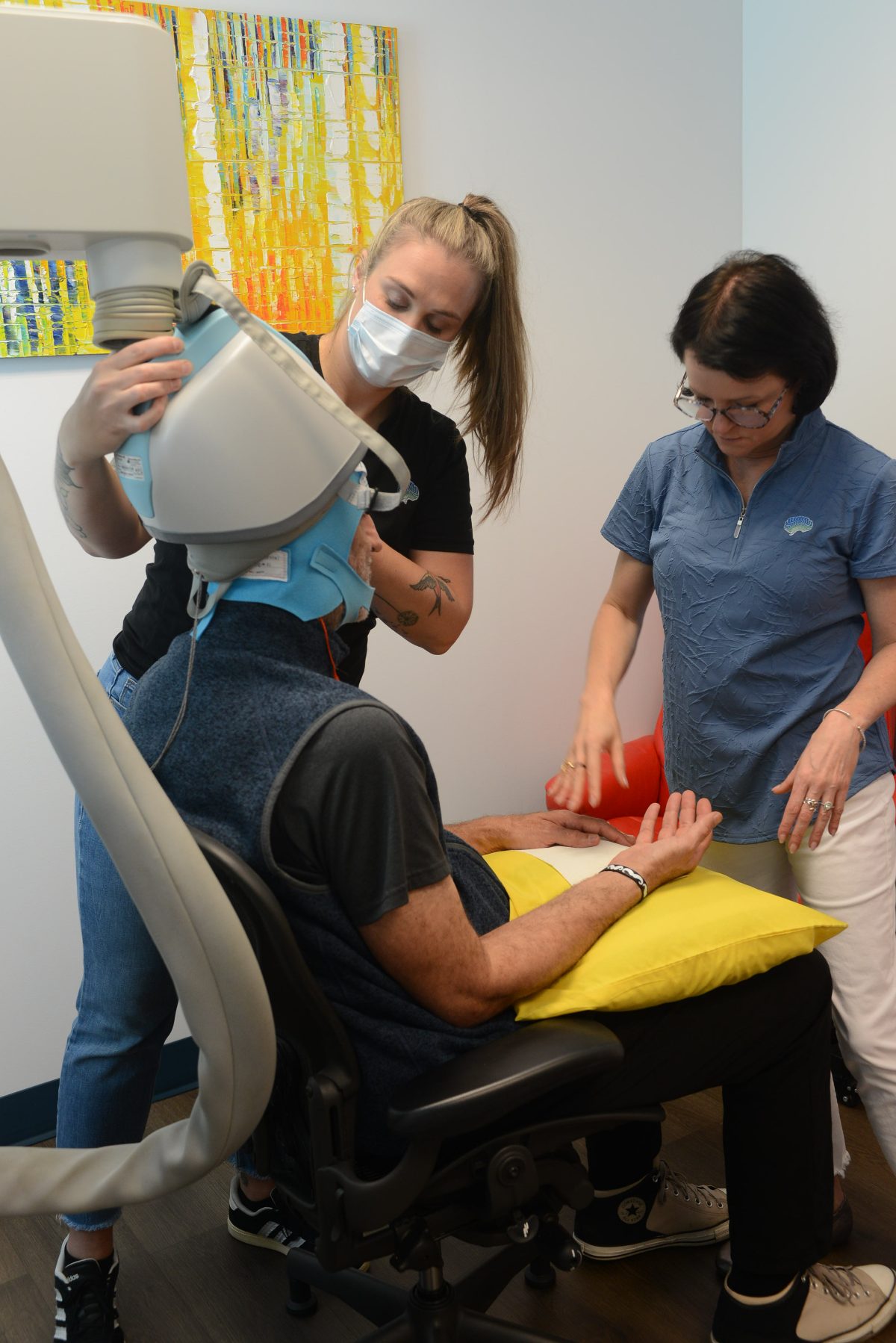
Like standard Deep TMS, accelerated Deep TMS is non-invasive and does not require anesthesia or downtime. The main difference is timing: several shorter sessions are grouped together so the acute phase can be completed in fewer treatment days.

In the multisite randomized controlled trial summarized by BrainsWay, the accelerated protocol produced outcomes comparable to the standard protocol while requiring considerably fewer visits to the clinic.

BrainsWay Deep TMS treatment system

Cleared Protocol

What the accelerated protocol looks like

The FDA clearance was based on a structured schedule that combines an intensive acute phase with weekly follow-up visits.

  • Acute phase: 5 sessions per day for 6 days, delivered over a 14-day period.
  • Follow-up phase: 2 sessions per day, once weekly, for 4 weeks.
  • Session length: each treatment session lasts less than 10 minutes.
  • Cleared indication: adults with MDD, including those with comorbid anxiety symptoms, after unsatisfactory improvement from prior antidepressant medication in the current episode.

Important: The final schedule is always individualized. FDA clearance defines the protocol, but real-world availability still depends on clinical history, safety, and insurance logistics.

At a glance

  1. Days 1 through 14 The acute phase condenses 30 sessions into 6 treatment days.
  2. Weeks 3 through 6 Patients then return weekly for 2 sessions on the same day.
  3. Clinical review Our team reviews tolerability, symptoms, and scheduling before confirming the plan.

Study Findings

How it compared with standard Deep TMS

The expanded clearance was supported by a multicenter, randomized, blinded, controlled non-inferiority trial evaluating accelerated Deep TMS with iTBS for depression.

After statistical adjustment, HDRS-21 scores decreased by 19.02 points in the accelerated group and 19.79 points in the standard group. Response rates were 87.8% and 87.5%, respectively, while remission rates were 78.0% and 87.5%.

Median time to remission was 21 days in the accelerated group versus 28 days in the standard group, and no severe adverse events were reported.

19.02

HDRS-21 points

Adjusted score reduction reported in the accelerated arm.

87.8%

response rate

Clinical response reported for the accelerated protocol.

78.0%

remission rate

Remission reached in the accelerated study arm.

21 days

median time to remission

Compared with 28 days in the standard treatment arm.

Getting Started

How to Start TMS Therapy

We keep the first steps clear so you know what happens before treatment begins.

Next steps

  1. Request a Consult Tell us you’re interested in TMS. We’ll get back to you within one business day.
  2. Clinical review and paperwork Once you’re approved and your paperwork is complete, we’ll schedule your first appointment within 5 business days.
  3. Mapping and first treatment At your mapping visit, we identify the treatment location and calibrate the stimulation level for you before beginning your first session.

Planning Considerations

Important questions before scheduling

Accelerated Deep TMS expands treatment options, but it does not mean every patient should use the intensive schedule.

Candidacy: It may be worth discussing if you are an adult with MDD, have not improved enough with antidepressants, and want a shorter acute treatment window.

Coverage: Because accelerated scheduling is a newer option, coverage can vary by plan. We review prior authorization, session limits, and benefits before confirming a schedule.

Alternatives: For some patients, standard Deep TMS or esketamine / Spravato may remain the more practical option depending on symptoms, time demands, and insurance benefits.

If you want broader context, you can also review our TMS for Depression page or learn more about esketamine / Spravato.

Contact Us

General Inquiries

For general questions, use this form and our team will follow up. Ready to request a consult? Please complete the consult request form.

Prefer to call? Reach us at 904-853-5867.