
OCD Deep TMS at a glance
- Non-invasive outpatient treatment
- Used with a brief personalized provocation
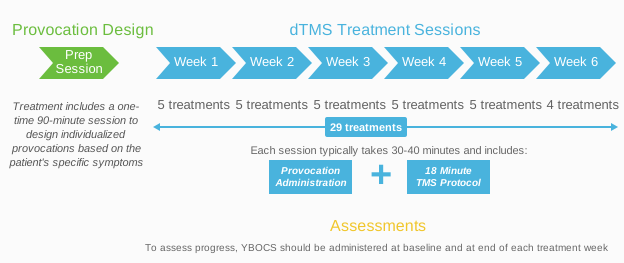
- A typical protocol is scheduled daily for about six weeks

Deep TMS for obsessive-compulsive disorder
Service Overview
In 2018, the FDA cleared BrainsWay Deep TMS for adults with obsessive-compulsive disorder (OCD) who have not responded satisfactorily to traditional treatments.
The treatment uses BrainsWay's H7 coil to stimulate brain circuits associated with OCD, including areas such as the anterior cingulate cortex and medial prefrontal cortex. We review symptoms, prior treatment history, and goals before recommending it.
The video shows the H7 coil and personalized provocation used as part of the OCD protocol.
Treatment Experience
Deep TMS is non-invasive, does not require anesthesia, and takes place in the office. Some people may have local discomfort or headache, so we review tolerability throughout treatment.
Deep TMS sessions for OCD involve a brief personalized provocation, or exposure, to activate the relevant areas of the brain, followed by an approximately 18-minute TMS treatment. A full course of BrainsWay OCD usually requires daily sessions over a six-week period.
Key Points
Obsessive-compulsive disorder (OCD) affects approximately 1.2% of U.S. adults. It is characterized by obsessions, compulsions, or both, and can interfere with work, relationships, sleep, and daily life. We evaluate whether TMS for OCD may fit within a broader treatment plan.
Some common categories that stimulate OCD-related anxiety include:
People with OCD can become stuck in repeating cycles of intrusive thoughts and compulsive behaviors. That cycle can be exhausting and can create significant stress, shame, and hopelessness.
Possible Causes for OCD
OCD has been found to be associated with a number of risk factors, such as genetics, environmental factors, temperament and critical life events. Those with OCD also often battle additional mental health conditions, with three in four having a history of anxiety disorders, and nearly one in two battling depression.
Getting Started
We keep the first steps clear so you know what happens before treatment begins.
Treatment Options
Treatment options for OCD include:
When it comes to evaluating the available treatment options for OCD, some options may not work the same way for everyone. Patients may need to combine different modalities to reach remission and maintain long-term success.
For more information on Deep TMS for OCD, you can review BrainsWay's overview. BrainsWay OCD treatment overview
Contact Us
For general questions, use this form and our team will follow up. Ready to request a consult? Please complete the consult request form.